
Myofascial Release in Salt Lake City
Slow, sustained work for tightness that stretching alone doesn't reach.
Book Myofascial Release Online
Utah Licensed Massage Therapist (LMT) · Myotherapy College of Utah
Myofascial Release in Salt Lake City, UT
Myofascial release in Salt Lake City is for the kind of tightness that doesn't respond to stretching, foam rolling, or a quick rubdown: the stiff, "stuck" feeling in your back, hips, neck, or shoulders that seems to live under the muscle. At Salt Lake Deep Tissue Massage, myofascial work is one of Timi's core specialties. She's a Utah Licensed Massage Therapist (LMT) trained at the Myotherapy College of Utah, and myofascial therapy is central to her practice.
Unlike many myofascial practices in the valley that market mainly to women, our myofascial sessions are designed for everyone, including active men, golfers, skiers, and professionals who carry years of tension and want an approach that is methodical and grounded in anatomy.
What Is Fascia?
Fascia is the connective tissue that surrounds and links every muscle, bone, nerve, and organ in the body. Picture a continuous web: it wraps individual muscle fibers, bundles of fibers, whole muscles, and groups of muscles, then connects them from head to toe. Healthy fascia is flexible and slides easily, which lets muscles move freely against each other.
Fascia can become less pliable because of repetitive motion (a golf swing, a running stride, hours at a keyboard), sustained postures, old injuries, surgery, or simply years of use. When that happens, you may feel stiffness, restricted range of motion, or tension that seems to travel from one area to another, like a tight hip that seems connected to a sore lower back.
What Is Myofascial Release?
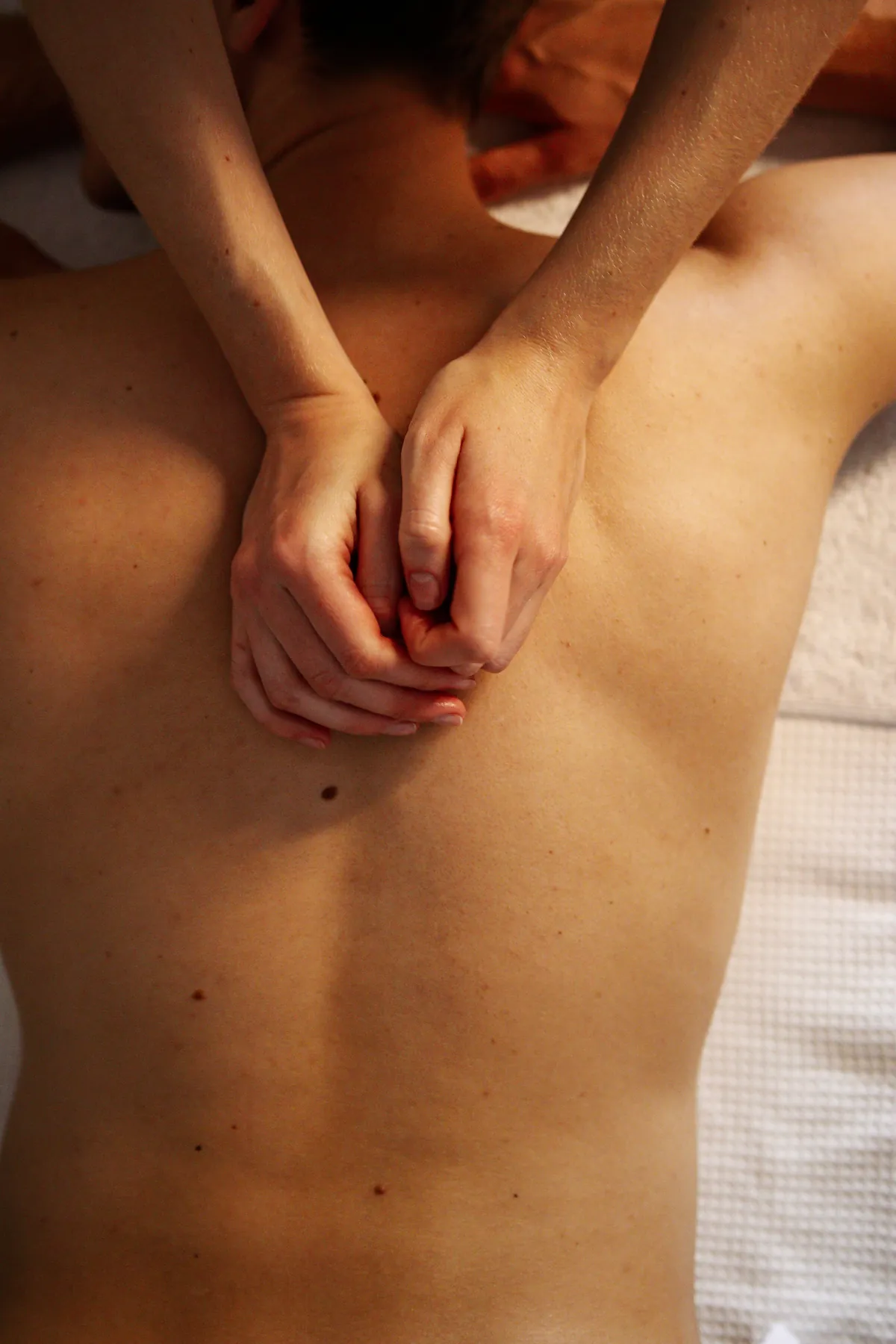
Myofascial release is a hands-on technique that uses slow, sustained pressure and gentle stretch to engage the fascia and give it time to soften and lengthen. Instead of gliding quickly over the skin with oil, the therapist often works with little or no lubricant, sinks into the tissue, and waits, sometimes holding a stretch for a minute or more while the tissue gradually gives.
In Timi's sessions, myofascial release is often combined with:
- Deep tissue massage to address dense muscle after the fascia has softened
- Cross-fiber and stripping techniques along tight bands
- Assisted stretching to help newly released areas move through a fuller range
- Positional work that addresses how one area, such as the hips, relates to another, such as the lower back
How Myofascial Release Feels
Myofascial work feels different from a typical massage. It's slower and quieter. You'll notice long, sustained holds, a gradual stretching sensation, and sometimes a feeling of warmth or "melting" as tissue softens. It can feel intense in restricted areas, but it shouldn't be sharp or painful. As with every session, you're in control of the pressure.
Because the technique relies on the therapist feeling the tissue respond, Timi works carefully and communicates throughout. Many clients find myofascial release surprisingly relaxing, even when the work is deep.
Who Myofascial Release Is For
Myofascial release may be a good fit if you:
- Feel chronically tight in the back, hips, neck, shoulders, or legs even though you stretch
- Notice that tension seems to move around or connect from one area to another
- Have restricted range of motion, like turning your head, rotating in your golf swing, or reaching overhead
- Spend long hours in one posture (desk, car, plane)
- Are an active adult who wants to keep moving well as you age
- Have found deep tissue alone hasn't fully addressed a stubborn area
When to check with your physician first
If you've had recent surgery, have a new injury, are being treated for a medical condition, have a blood clotting disorder or take blood thinners, or have unexplained pain, please consult your physician before booking and note it on your intake form.
Potential Benefits of Myofascial Release
Massage is not a medical treatment, and responses vary. Clients commonly choose myofascial release because it may help:
- Ease the feeling of restriction and stiffness
- Improve flexibility and range of motion
- Relieve muscle tension associated with posture and repetitive activity
- Support recovery for active clients
- Promote relaxation through slow, sustained work
- Increase awareness of how different areas of your body connect and compensate
What to Expect During a Session
Intake and consultation
Send a booking request online and complete the health intake. At your session, Timi asks where you feel restricted and how it affects your daily life, your sport, or your work. She may look at your posture or have you move so she can see where you're compensating.
On the table
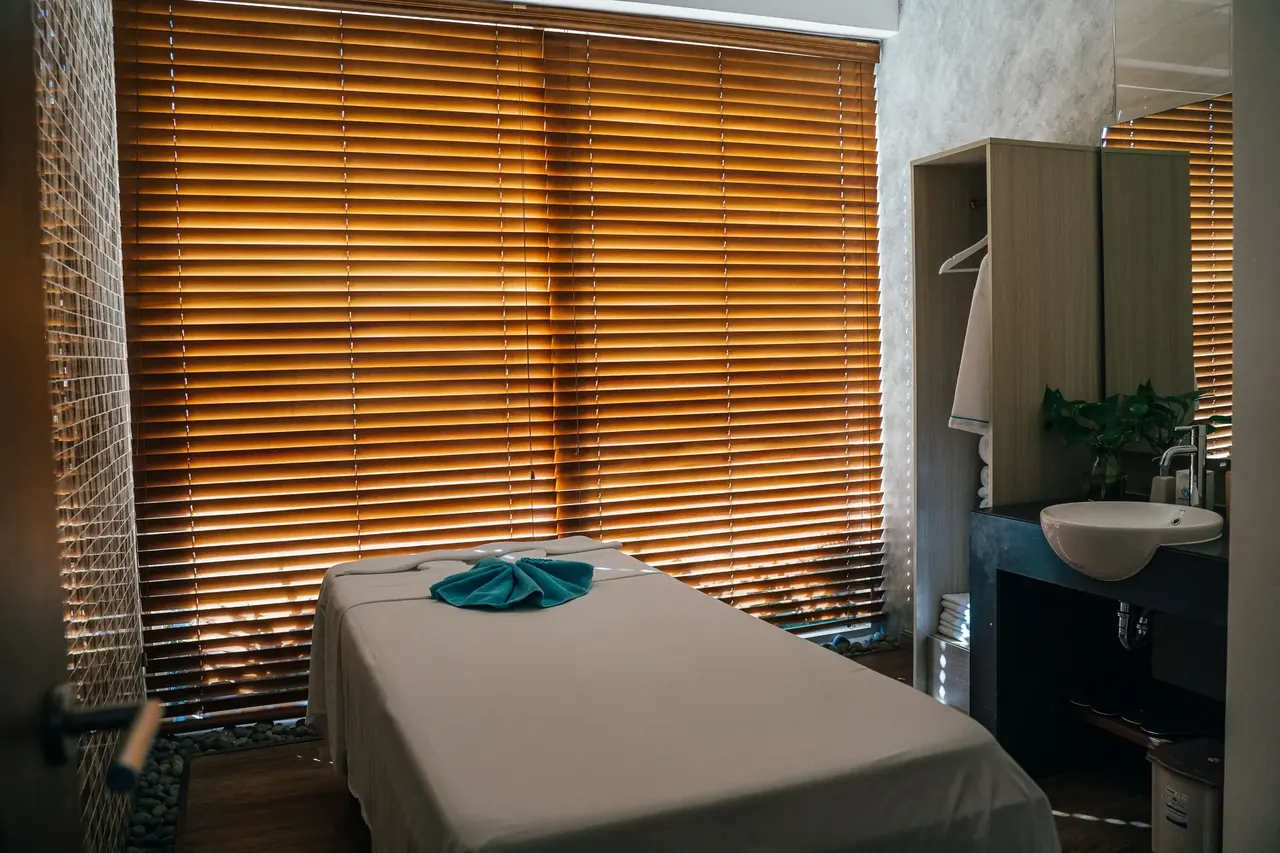
You'll be professionally draped at all times, with only the area being worked on uncovered. Expect a slower pace than a typical massage, with sustained holds and stretches.
After your session
You may feel lighter and looser. Some people also feel tired or mildly sore the next day as the body adjusts. Drink water, move gently, and notice how your range of motion feels over the next few days.
Myofascial Release for Golfers, Skiers & Desk Professionals
- Golfers: rotation lives in the hips, thoracic spine, and shoulders. Restriction in any of those can change how your swing feels. Myofascial work around the hips, obliques, and upper back is a staple of our golf and ski massage sessions.
- Skiers: long days in a flexed stance load the quads, hip flexors, and lower back. Myofascial release may help those areas feel less locked up between ski days.
- Desk professionals: hours in a chair can leave the chest tight, the upper back overstretched, and the neck stiff. Myofascial work on the chest, neck, and upper back is a common focus for clients who work long hours. See also massage for back and neck pain.

Session Length & Pricing
- 60 minutes ($120): best for one focused region.
- 90 minutes ($180): recommended for myofascial work, because the slow pace needs time, especially when more than one region is involved.
Why Choose Salt Lake Deep Tissue Massage for Myofascial Work
- Myofascial therapy is a core specialty, not an add-on
- Utah-licensed: Licensed Massage Therapist (LMT), licensed by the Utah Division of Professional Licensing (DOPL)
- Integrated approach: myofascial, deep tissue, sports, and stretching in one session
- Welcoming to all clients, including active men, in a clinical and professional setting
- Convenient to Millcreek, Holladay, Salt Lake City, and the south valley
Professional Standards
This is a therapeutic, non-sexual practice. Professional draping is used at all times. Any sexual request, comment, or behavior ends the session immediately, is charged in full, and may be reported to law enforcement. Professional Boundaries Policy.
Myofascial Release FAQ
Is myofascial release the same as deep tissue massage?
No, though they overlap. Deep tissue focuses on deeper muscle layers with slow, firm strokes. Myofascial release focuses on the connective tissue with sustained holds and stretches. Timi often uses both in the same session.
Does myofascial release hurt?
It can feel intense in restricted areas, but it shouldn't be sharp or painful. The pressure is slow and sustained, and you can ask for adjustments anytime.
How many sessions will I need?
It varies. Some clients notice a difference after one session. Long-standing restriction often responds best to a series of sessions spaced one to two weeks apart, followed by maintenance.
Is myofascial release the John F. Barnes method?
Timi's myofascial training comes from her massage education at the Myotherapy College of Utah.
What should I wear?
You'll be professionally draped on the table. Because myofascial work uses little oil, some clients prefer athletic shorts. Either is fine.
Can myofascial release help with chronic pain?
Massage can't diagnose or cure chronic pain conditions. Some people find myofascial release may help relieve the muscle tension and stiffness that accompany their discomfort. It works best alongside guidance from your medical provider.

Feel less stuck. Book myofascial release in Salt Lake City online. Book Online · Existing clients: (801) 609-6002