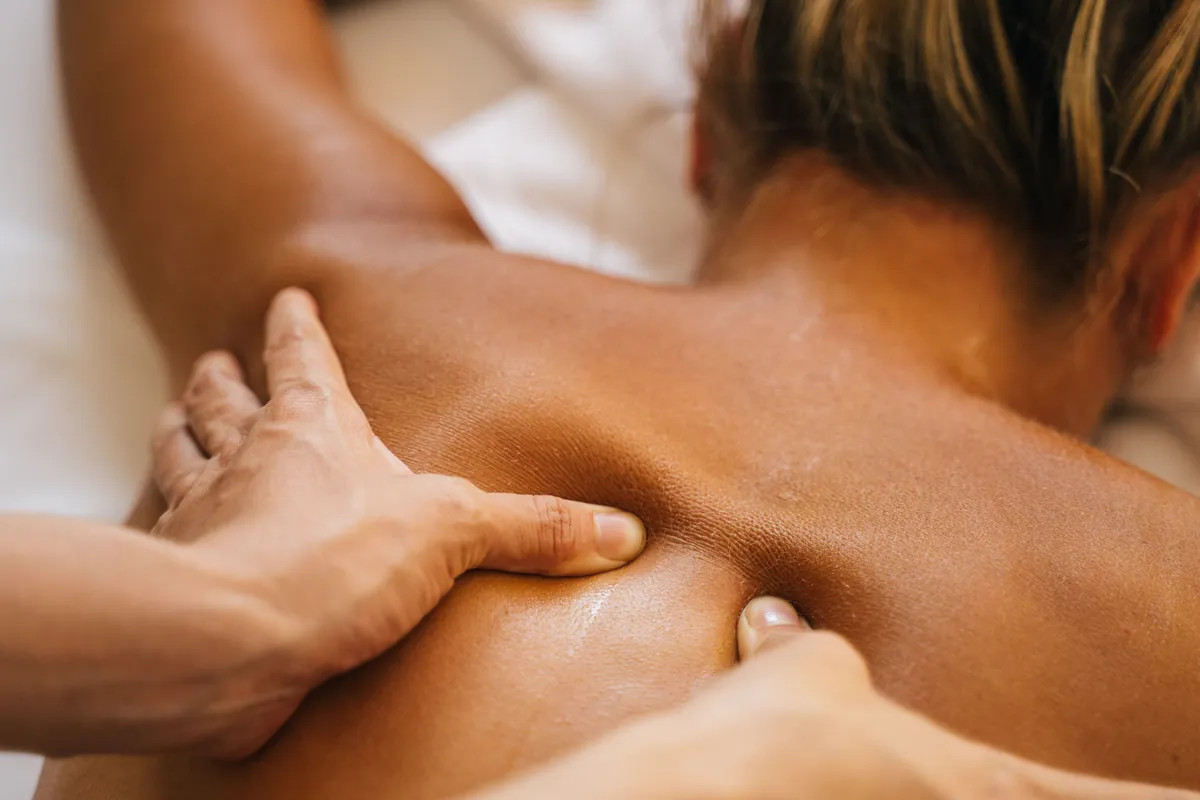
Deep Tissue Massage in Salt Lake City
Slow, firm, focused work for the muscles that won't let go.
Utah Licensed Massage Therapist (LMT) · 60 & 90 min sessions
Deep Tissue Massage in Salt Lake City, UT
Deep tissue massage in Salt Lake City is the core of what we do. It's the reason the practice is called Salt Lake Deep Tissue Massage. If most massages feel too light, if you have a knot you've been carrying for years, or if your back and hips feel tight no matter how much you stretch, deep tissue work is designed for you. Every session is performed by Timi, a Utah Licensed Massage Therapist (LMT) trained at the Myotherapy College of Utah, in a private, clinical studio.
Deep tissue massage uses slow strokes and sustained, firm pressure to reach the deeper layers of muscle and the connective tissue (fascia) around them. It isn't about pushing as hard as possible. It's about working with the tissue patiently enough that it softens instead of fighting back.
What Is Deep Tissue Massage?
Deep tissue massage is a therapeutic style of massage that targets deeper muscle layers and connective tissue rather than just the surface. Where a relaxation (Swedish) massage uses long, flowing strokes to calm the nervous system, deep tissue massage slows down and concentrates on specific areas of tension, often the lower back, glutes, hips, hamstrings, neck, upper back, and shoulders.
Common deep tissue techniques include:
- Slow stripping strokes along the length of a muscle using the forearm, knuckles, or thumbs
- Sustained compression on areas of tension until the tissue begins to release
- Cross-fiber friction across tight bands of muscle
- Myofascial techniques that stretch and hold connective tissue (see myofascial release)
- Targeted stretching to help a worked area lengthen afterward
Timi blends these techniques with elements of sports and rehabilitative massage, Shiatsu, and Thai-style stretching, depending on what your body needs that day.
Who Deep Tissue Massage Is For
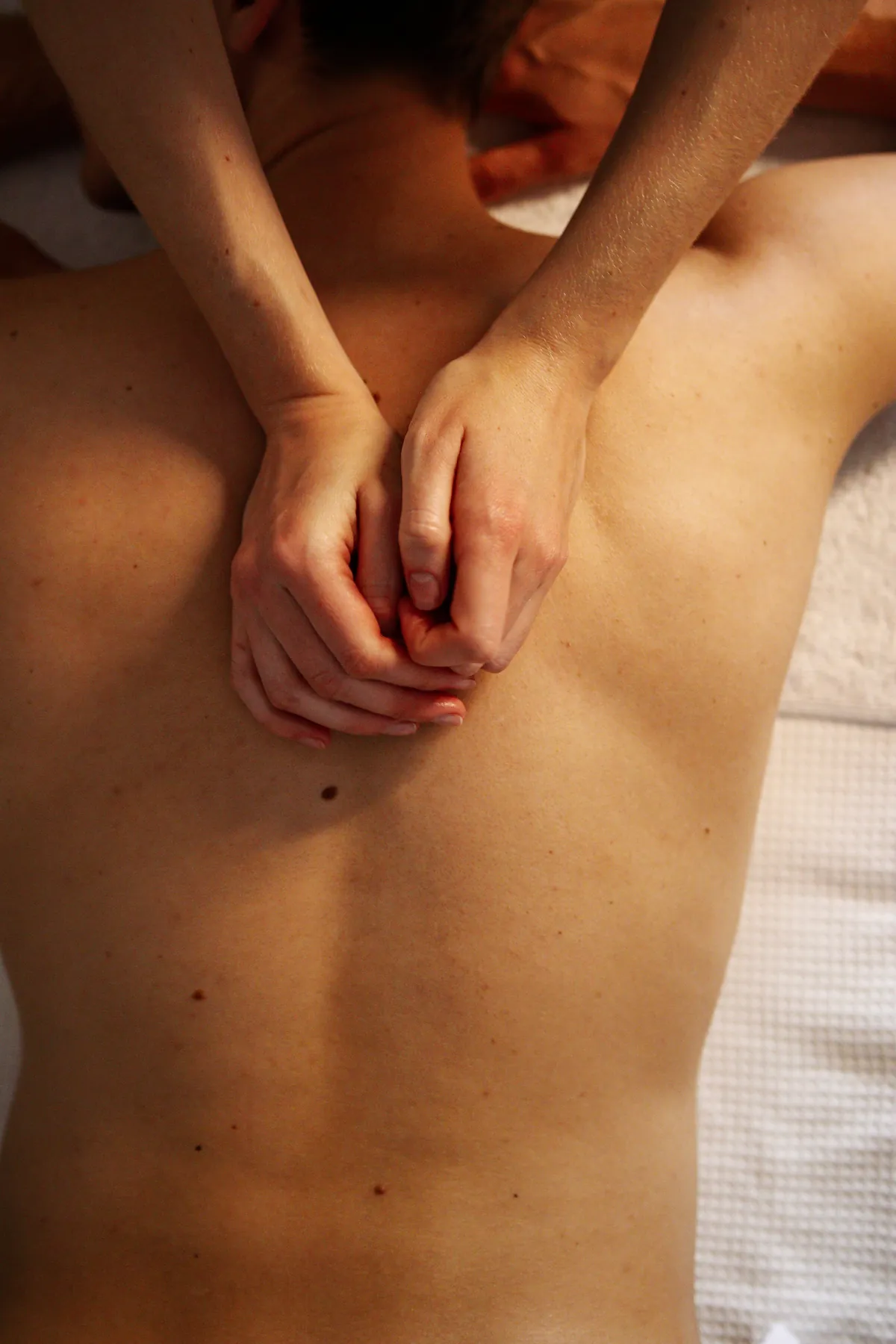
Deep tissue massage is a good fit if you:
- Have chronic tightness in the lower back, hips, neck, or shoulders
- Feel stiff after golf, skiing, running, cycling, or lifting
- Spend long hours at a desk, on calls, in the car, or on flights
- Prefer firm pressure and find most massages too light
- Have "knots" that come back week after week
- Want a regular maintenance routine to keep moving well as you get older
Many of our deep tissue clients are active men and women in their 40s, 50s, 60s and beyond who want to keep playing the sports they love and working without their body getting in the way.
When deep tissue may not be the right choice
Deep tissue work isn't appropriate for everyone or every day. Tell us on your intake form if you have a recent injury, recent surgery, a blood clotting disorder or take blood thinners, have osteoporosis, are pregnant, have uncontrolled high blood pressure, or have any condition your doctor has asked you to be careful with. Timi may adjust pressure, avoid certain areas, or ask you to get your physician's clearance first.
Potential Benefits of Deep Tissue Massage
Massage therapy is not a medical treatment, and results vary from person to person. With that said, clients commonly book deep tissue massage because it may help:
- Relieve muscle tension and stiffness in chronically tight areas
- Ease the feeling of "knots" and tender spots
- Improve how freely you move through the hips, back, and shoulders
- Support recovery between workouts, rounds of golf, and ski days
- Reduce stress and help you feel more relaxed and settled
- Increase body awareness, so you notice tension patterns earlier
If you're dealing with pain that is severe, getting worse, or accompanied by numbness, weakness, or other unexplained symptoms, see a physician before booking.
How Much Pressure Is Right?
This is the most common question we hear, and the answer is simple: enough to make a difference, never so much that you tense up. Effective deep tissue work often feels intense in tight areas. Many clients describe it as a "good hurt." But if you're holding your breath, clenching your jaw, or pulling away, the pressure is too much and the muscle will guard instead of release.
Timi works in gradually, checks in about pressure, and adjusts throughout the session. You're always in control. Say "more," "less," or "skip that spot" at any time. Deep doesn't mean rough, and it definitely doesn't mean bruising.
What to Expect During a Deep Tissue Session
Before your session
Send a booking request online and complete the health-intake form. You'll get the studio address and arrival details once your booking is confirmed. Wear comfortable clothing and avoid a heavy meal right beforehand.
Consultation
Your session begins with a short conversation: where you're tight, what aggravates it, what you do for activity and work, and any goals such as an upcoming tournament, race, or ski trip.
On the table
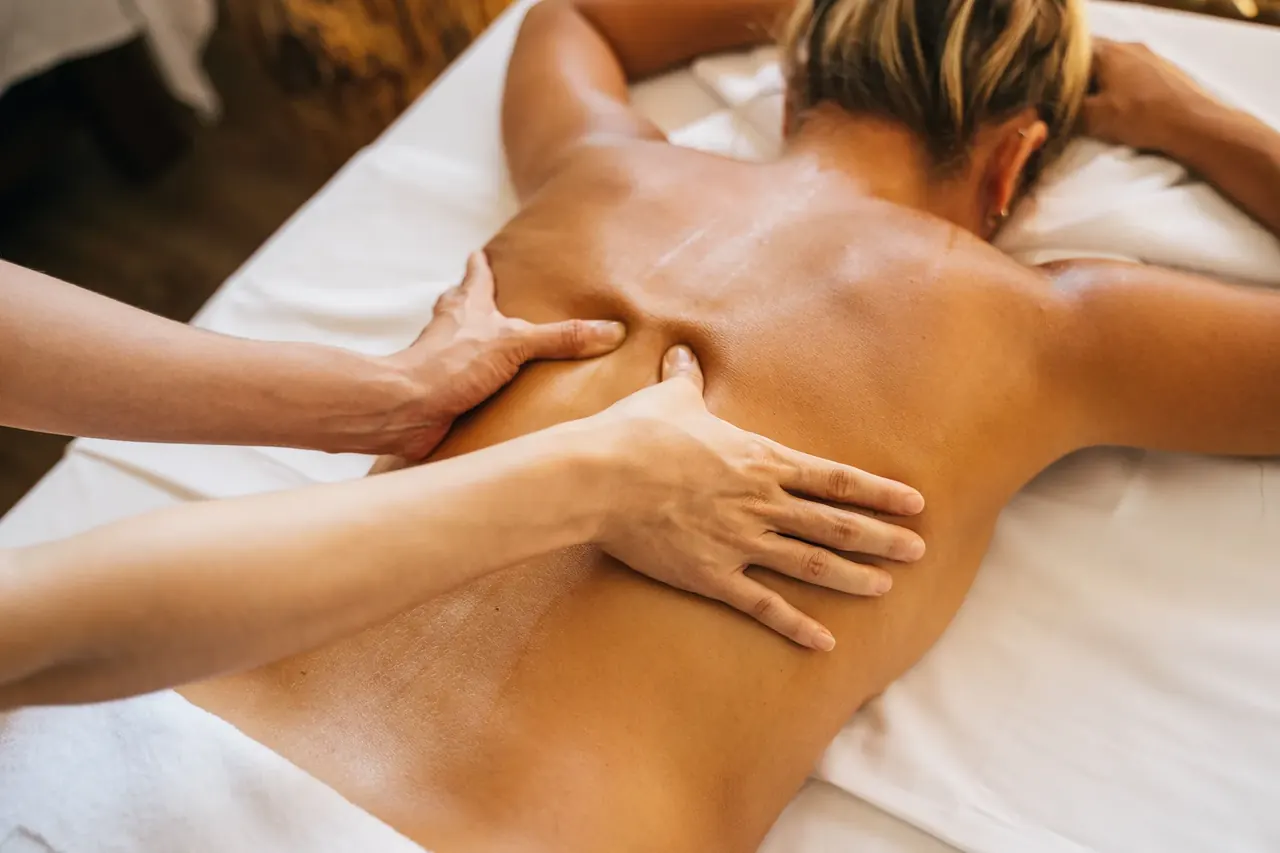
You'll undress to your comfort level in private and lie under a sheet and blanket. Professional draping is maintained throughout, and only the area being worked on is uncovered. Most sessions spend extra time on two or three priority areas instead of rushing the whole body. The table is heated for comfort.
After your session
You'll likely feel looser and more mobile. Mild soreness for 24–48 hours is normal after deep work, similar to after a hard workout. Drink water, keep moving gently, and consider a warm shower or bath. Let Timi know how you felt at your next appointment so she can fine-tune the pressure.

60 or 90 Minutes?
- 60 minutes ($120): best for one or two focus areas, or regular maintenance sessions.
- 90 minutes ($180): recommended for first visits, for full-body deep tissue, or when several areas need work. Ninety minutes gives the tissue time to respond without rushing, and it's the most popular length for deep tissue clients.
Deep Tissue vs. Sports vs. Myofascial Massage
- Deep tissue massage concentrates on chronic tension in deeper muscle layers with slow, firm pressure.
- Sports massage is organized around your sport and training cycle (pre-event, post-event, or maintenance) and usually includes more stretching.
- Myofascial release focuses on the connective tissue itself, with slower, sustained holds and stretches.
In practice, most of Timi's sessions use all three. The name on the booking just tells her where to start.
Why Choose Salt Lake Deep Tissue Massage
- Utah-licensed: Licensed Massage Therapist (LMT), licensed by the Utah Division of Professional Licensing (DOPL)
- Trained in therapeutic technique: Myotherapy College of Utah, with training in deep tissue, sports, rehabilitative, and myofascial methods
- Firm pressure done carefully: slow, communicative work that stays within your comfort range
- Private and professional: by appointment only, health intake for every new client, clear boundaries
- Convenient to the east side: serving Salt Lake City, Holladay, Millcreek, Cottonwood Heights, Murray, and the south valley
Professional Standards
Salt Lake Deep Tissue Massage is a therapeutic, non-sexual practice. Professional draping is used at all times. Any sexual request, comment, or behavior ends the session immediately, is charged in full, and may be reported to law enforcement. New clients must send a booking request online and complete the health intake. Read the full policy.
Deep Tissue Massage FAQ
Will deep tissue massage hurt?
Some areas may feel intense, but it shouldn't be painful to the point of tensing up. Timi adjusts pressure throughout and you can ask for more or less at any time.
How sore will I be afterward?
Mild soreness for a day or two is common, especially after your first session or after work on a very tight area. It usually feels like post-workout soreness and fades quickly.
How often should I get deep tissue massage?
For chronic tightness, many clients start with sessions every one to two weeks for a short period, then move to every three to four weeks for maintenance. Active clients often book around their season.
Is deep tissue massage good for men who are very tight or muscular?
Yes. Clients with dense muscle or long-standing tension often prefer deep tissue work, and 90-minute sessions give enough time to address it thoroughly.
Can I get deep tissue massage if I've had a recent injury?
Please note any injury on your intake form. Depending on the injury and how recent it is, Timi may adjust the session, work around the area, or ask you to check with your physician first.
What should I do after a deep tissue massage?
Drink water, move gently, and avoid a heavy workout that same day if you can. A warm shower can help. Pay attention to how you feel over the next two days and share it at your next visit.

Book deep tissue massage in Salt Lake City. Online booking request, health intake, confirmed personally by text or phone. Book Online · Existing clients: (801) 609-6002